 Physix Frontier
OpenAI Drops 20+ New Products at Once, but the Real Star Is AI That Keeps Working

Dots, ChatGPT Space, Codex, and the new model all point in the same direction: AI is moving from answering questions to taking over tasks.
Dots: AI starts watching projects in the background
On September 29, OpenAI dropped over 20 updates at DevDay in one go. The list is long, but the direction is very focused: turning AI from "you ask, it answers" into software that can keep pushing tasks forward in the background. The clearest example of this shift is Dots.
Dots has a cloud computer and can use connected apps to handle work. After the user states a goal and sets the scope it can execute on its own, it can keep running. The scenarios OpenAI showed include maintaining sales proposals, updating materials as customer needs change, and generating demo products for review. These demos show it can get through the relevant workflows, but they can't answer questions about stability and rework volume during long runs.
Currently, Dots is open to Pro and Business Premium users, and some enterprise, education, and healthcare workspaces can be enabled for testing by admins. Access is still limited, and a product demo can't prove it can already reliably take over a job. The more accurate judgment right now is that OpenAI has started handing persistent agents to users as a product form for trial.
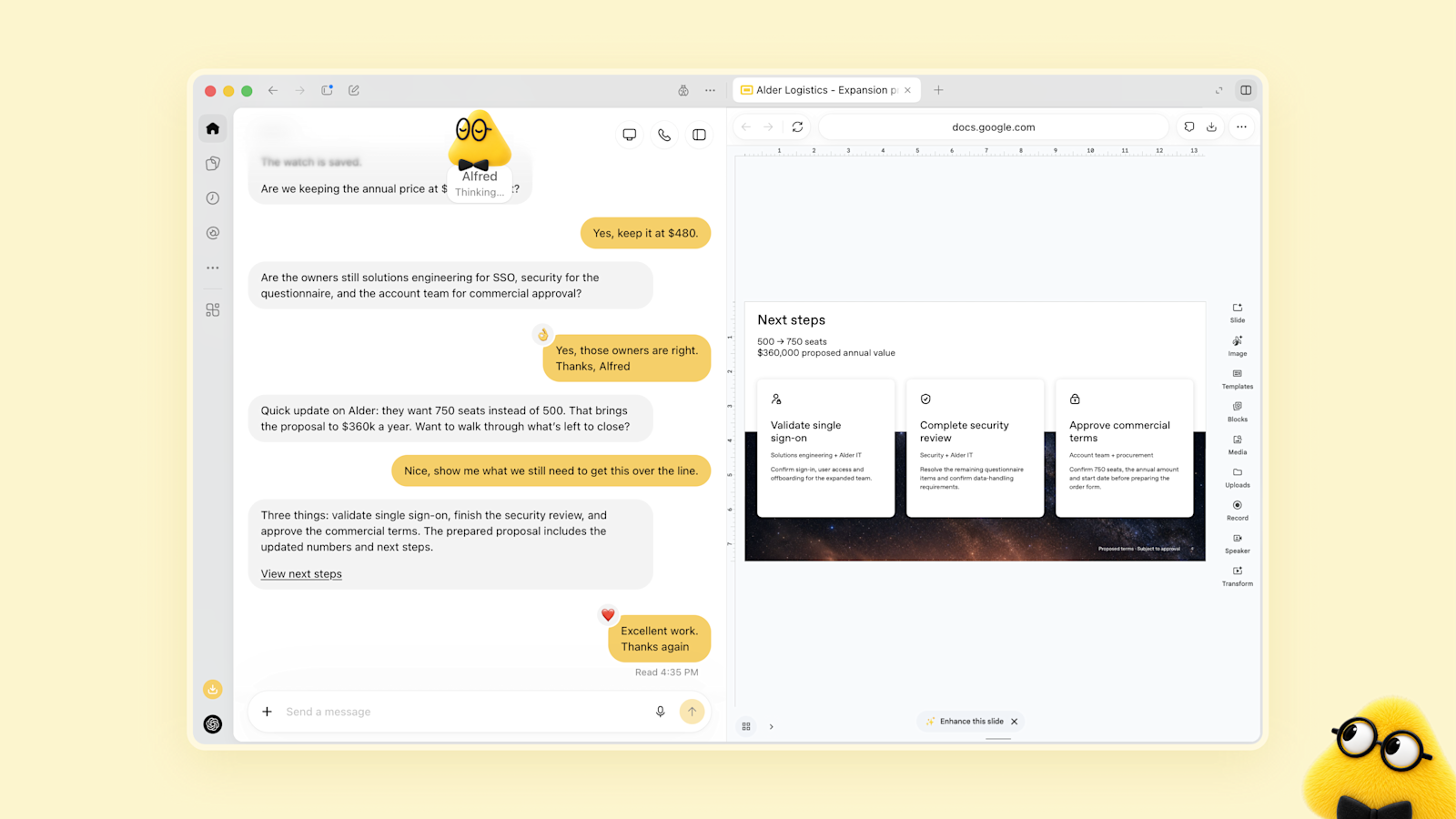
OpenAI's official demo of the Dots enterprise proposal workflow. The image comes from a product demo and cannot prove long-term performance.
ChatGPT Space: Team work gets a shared context
If Dots handles continuous execution, ChatGPT Space is more like a space for teams to work together. Members can collaborate with ChatGPT inside it, turn conversations into pages or presentations, and then invite colleagues to add edits. OpenAI also launched team tasks, @ChatGPT in Slack and Microsoft Teams, and meeting notes features.
This shifts the competitive focus of enterprise software beyond just how well the model answers, to whether project materials can be retained, whether members can continue collaborating, and whether tasks can be delivered continuously. Whether users come back often and whether teams are willing to pay ultimately depends on whether the product can enter daily workflows.
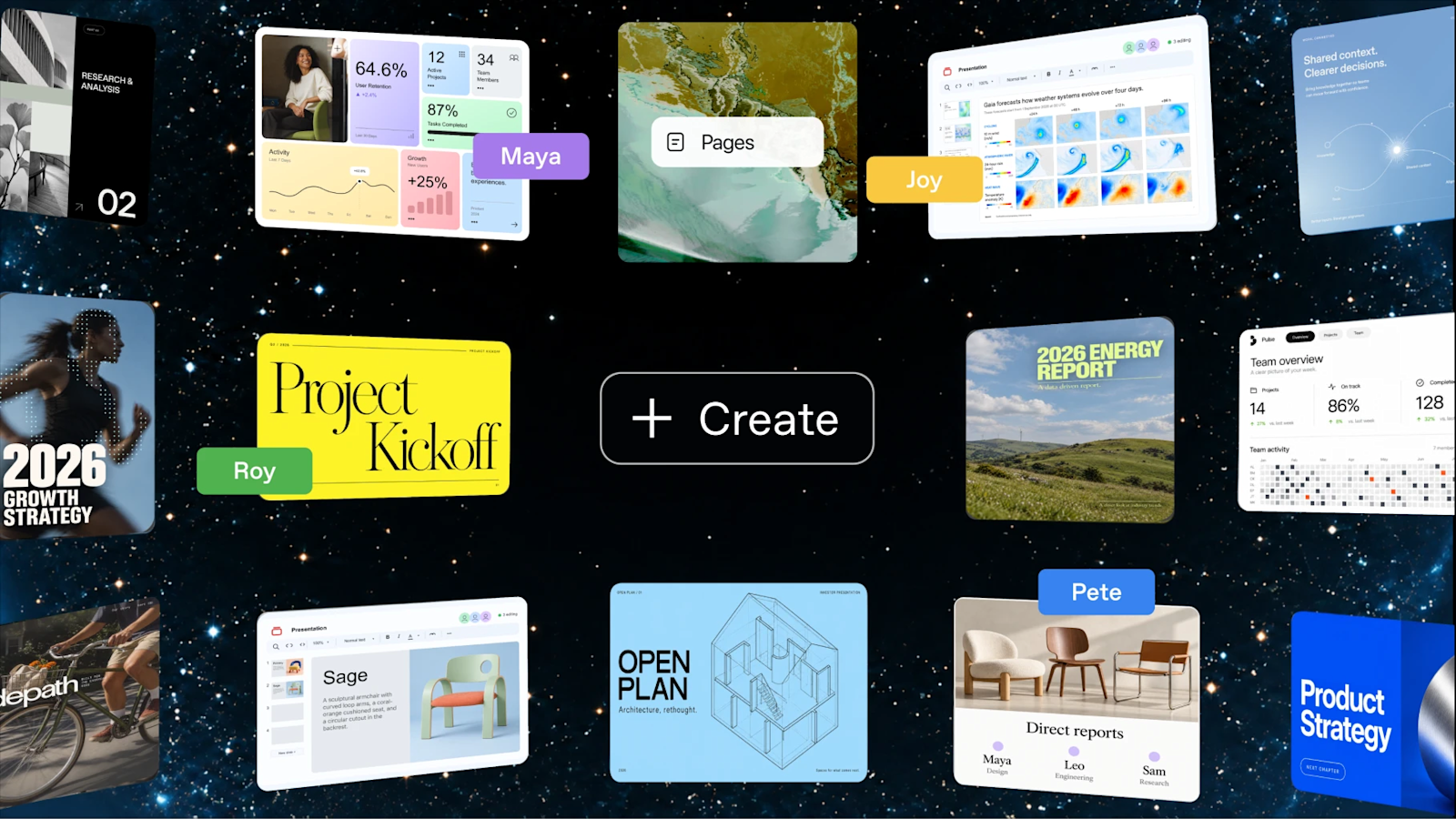
ChatGPT Space and Pages collaboration interface in OpenAI's official DevDay demo, September 29, 2026.
Codex and API: Handing agent execution capabilities to developers
Developers can run Codex locally, remotely, or in the cloud. Reusable development environments let tasks start faster and make it easier for teams to share approved tools and permissions. The Agents API adds computer operation capabilities; the Decisions API limits the model to the questions and answers preset by the user, and can be used for classification, routing, or deciding the agent's next action. It is still in limited preview.

OpenAI's official Codex Cloud product interface, September 29, 2026.
Plugin extensions and MCP event triggers are also worth noting. Developers can put apps into the ChatGPT sidebar, and can also let external events start automated workflows. OpenAI says developers can distribute native experiences to ChatGPT users. If this mechanism is accepted by users, ChatGPT could become both a model entry point and a distribution channel for AI apps.
Model price cuts and a high-speed tier correspond to two kinds of bills
GPT-6.1 Sol is the focus of this model update. OpenAI says it approaches GPT-6 Astra in some coding, computer operation, and professional work evaluations, with standard input and output token prices at about one-fifth of Astra's. Sol has entered the API, Codex, and ChatGPT Work, but has not yet entered regular ChatGPT conversations. These evaluations and the judgment that it "approaches Astra" come from OpenAI and cannot be directly extended to all real tasks.
Ultrafast turns speed into a high-priced tier: Codex up to 300 tokens per second, API up to 6 times faster. The $500-per-month Pro 500 plan provides 25 times the usage of Plus quota. Product pricing thus splits into two ends: Sol lowers the call cost of complex tasks, while Ultrafast and high-quota subscriptions target customers willing to pay for speed and usage. Public information is still not enough to judge the gross margins and actual usage costs at each end.
After the launch event, watch whether tasks can be completed reliably
OpenAI wants to turn ChatGPT into the entry point for work, a platform for agents to call tools, and also a channel for developers to reach users. Reuters reported that OpenAI says Codex and ChatGPT Work have more than 35 million weekly active users, and regular ChatGPT has more than 1.2 billion weekly active users. These numbers show it has a huge distribution base, but user scale does not equal revenue, and API call volume does not equal profit.
Agents still have to pass the reliability and permission management test. Reuters recorded that the voice update demo at DevDay failed to return normally several times. OpenAI says users can set rules, and sensitive operations such as changing passwords or permanently deleting data require explicit consent. Once agents can do more, completing tasks reliably, explaining the execution process, and stopping before overstepping authority will all affect whether users dare to hand work over to them.
What is worth tracking next is Dots' continuous usage rate, how much manual rework is needed after tasks are completed, the model cost per job, and whether enterprise customers renew. These are closer to business answers than launch event demos. Before the data comes out, Dots represents a new product direction being trialed, not a proven job replacement solution.
Sources: OpenAI DevDay 2026 official recap and product descriptions; Reuters, September 29, 2026 report. Performance, pricing, and active user data in this article are all attributed to their sources.