 Physix Frontier
Non-coding junior builds an app in 3 days using AI to scrape 88 data points

Xiao Lin can't write code. But she used AI to scrape 88 pieces of emotional data and built an App in 3 days.
She studied Digital Media, not Computer Science. Web scraping, APIs, data analysis—she knew none of it. On the traditional path, she would have had to spend half a year learning Python first.
But she just said one sentence, and three minutes later, 88 real pieces of emotional data were lying right in front of her.
ONE One Sentence, 88 Data Points
Xiao Lin wanted to build an emotion management App, but she didn't know what people's actual emotional pain points were. Sending out surveys was too slow, and interviews had too small a sample size. What she needed was a large amount of real data.
So she said one sentence to WorkBuddy:
"Search Xiaohongshu (RED) posts from the past week, with keywords including 'grad school entrance exam anxiety', 'high work pressure', 'breakup loneliness', and 'anxious internal friction'. Scrape post content and comments, categorize them into four dimensions: study, work, relationships, and family, and extract emotion tags."
She went to pour herself a glass of water. When she came back, the screen already listed 88 data points.
Each data point came with a title, body text, comment count, like count, publication time, and IP location. The AI also automatically assigned emotion tags—anxiety, exhaustion, loneliness, internal friction, insomnia.
They were categorized by theme: 20 for study, 20 for work, 20 for relationships, and 28 for mental internal friction.
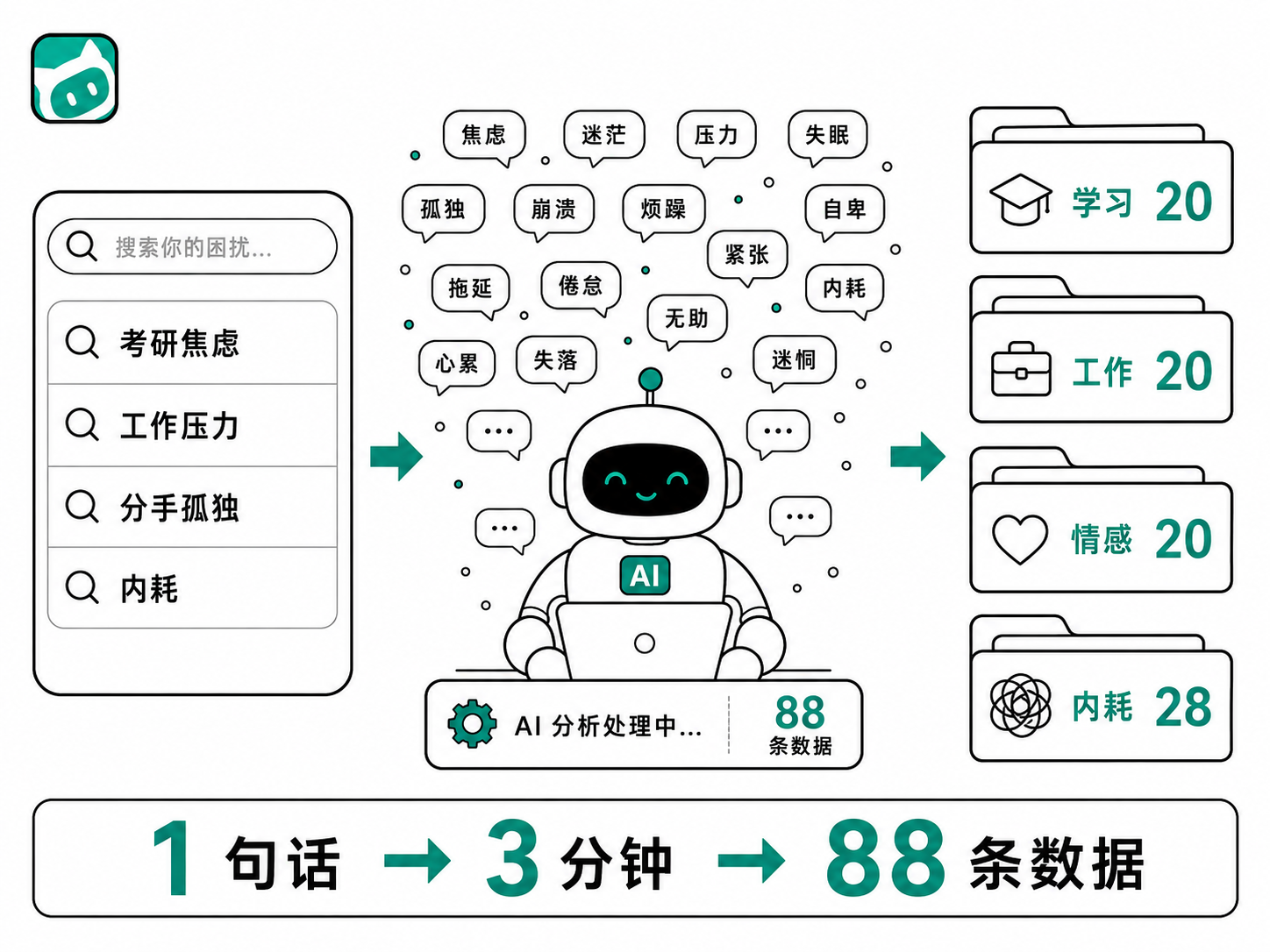
Fig 1: From one sentence to 88 data points in 3 minutes
TWO Three Discoveries That Sent Chills Down Her Spine
Xiao Lin thought she understood "anxiety" well. The data told her she was wrong.
Discovery 1: She thought "internal friction" was anxiety unique to students, but the data showed that grad school candidates, office workers, and housewives were all talking about the same thing. This wasn't a patent of any specific group; it was a common ailment for everyone.
Discovery 2: She thought the most posts happened late at night, but the data showed the peak posting time for emotional posts was between 7 AM and 9 AM. People weren't breaking down at midnight; they felt the heaviest sense of helplessness when waking up in the morning.
Discovery 3: IP locations were concentrated in tier-1 and tier-2 cities, with Beijing, Shanghai, Guangzhou, and Shenzhen accounting for about 60%. This meant the early version of the App should focus on young professionals and exam candidates, rather than general users.
These three discoveries directly changed the feature priority of her App. The "Break Internal Friction Patterns" feature, originally ranked last, was moved to the highest priority.
THREE AI Helps You Go From 0 to 1, But You Have to Walk the Path From 1 to 100 Yourself
With the data in hand, Xiao Lin asked AI to help with the next step:
"Based on these 88 emotional data points, help me analyze: 1. What is the most frequent user emotion; 2. What are the most common trigger scenarios for each emotion; 3. Based on the analysis, design 5 core features for my App."
The feature suggestions given by the AI were so precise they sent chills down her spine—not because they were profound, but because it truly understood what lay behind those emotions.
For example, it suggested adding an "Emotion Check-in" feature: not writing a diary, but selecting an emoji every time you open the App. After checking in for 7 consecutive days, it generates an emotional fluctuation chart. Because the data showed that anxious people need to see their own emotional patterns more than they need advice.
But there were three things AI couldn't do.
First, she had to judge which data was valuable herself. AI only handled classification, not insight. The judgment that "mental internal friction is a cross-group universal pain point" was something she figured out herself.
Second, she had to decide the direction of the App herself. AI suggested 5 features, but choosing which ones, how to prioritize them, and what the interface looked like—all were decisions she made. AI is an advisor, not a decision-maker.
Third, she had to talk to users herself. Data tells you "what," but not "why." Why do grad school candidates post "I can't take it anymore" at dawn? The answer can only be found through dialogue with real people.
AI helped her go from 0 to 1. The road from 1 to 100 has to be walked by herself.
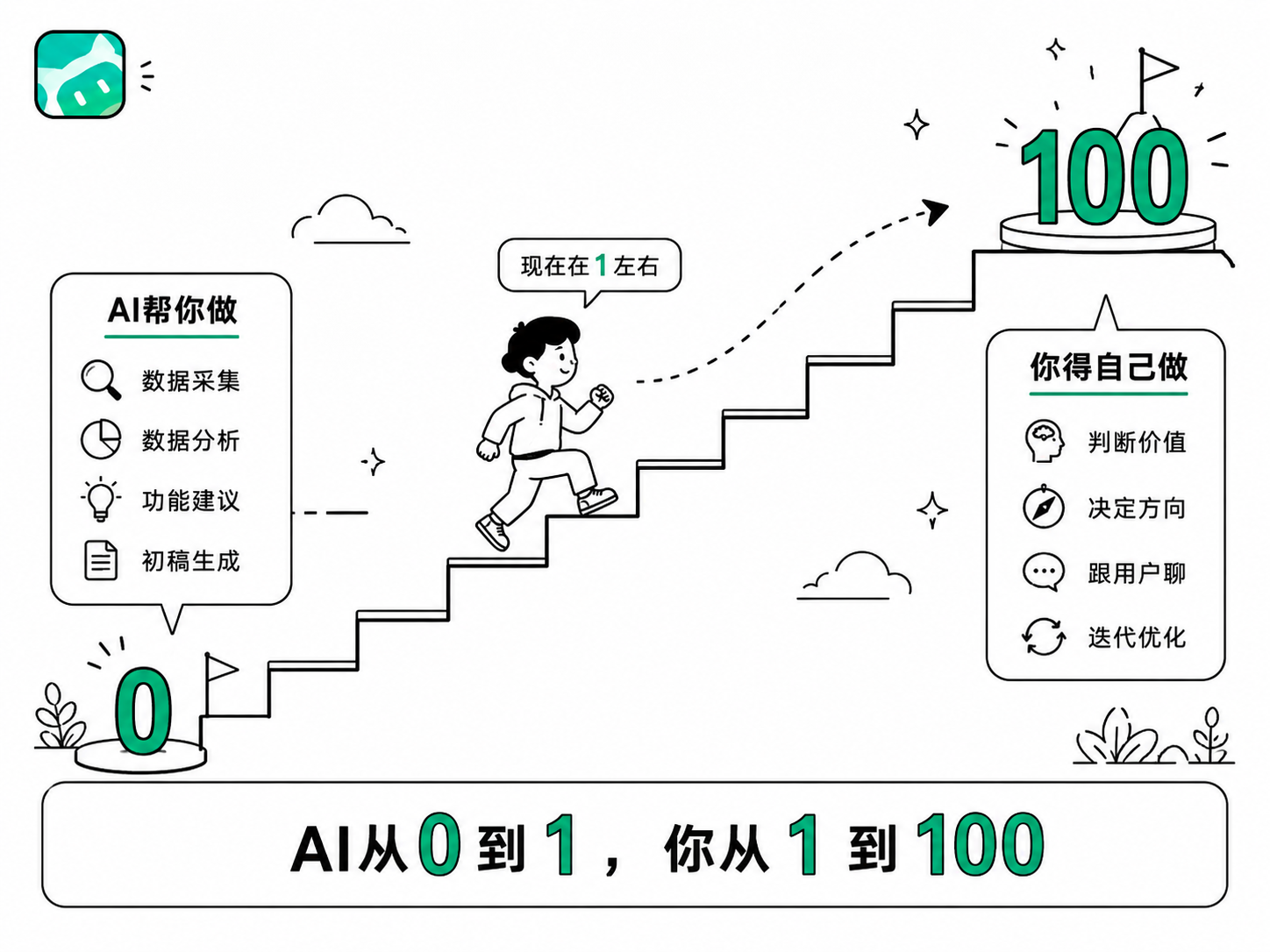
Fig 2: AI helps you go from 0 to 1, but you must walk the path from 1 to 100 yourself
Final Words
In the past, a junior student wanting to do this might have spent an entire semester learning the technology. Now, she only spent one early morning.
She used the remaining time to think about more important things—how to truly help those who are anxious.
This is what AI should look like. Not replacing your thinking, but saving you time so you can think about the things that truly matter.
