 Physix Frontier
Physix Frontier · Alpha News

Physix Frontier · Alpha News Draft
September 6, 2026 · Sunday (Issue #039 · Preview Version)
Coverage Window: Global 24 hours (US East Close 9/4 + Asia-Pacific Markets 9/5 to 9/6 Morning)
🧠 I. AI Large Models
NVIDIA Pushes Local AI at IFA; RTX Spark Teams Up with Microsoft to Bring Cutting-Edge Intelligence to Personal Computers
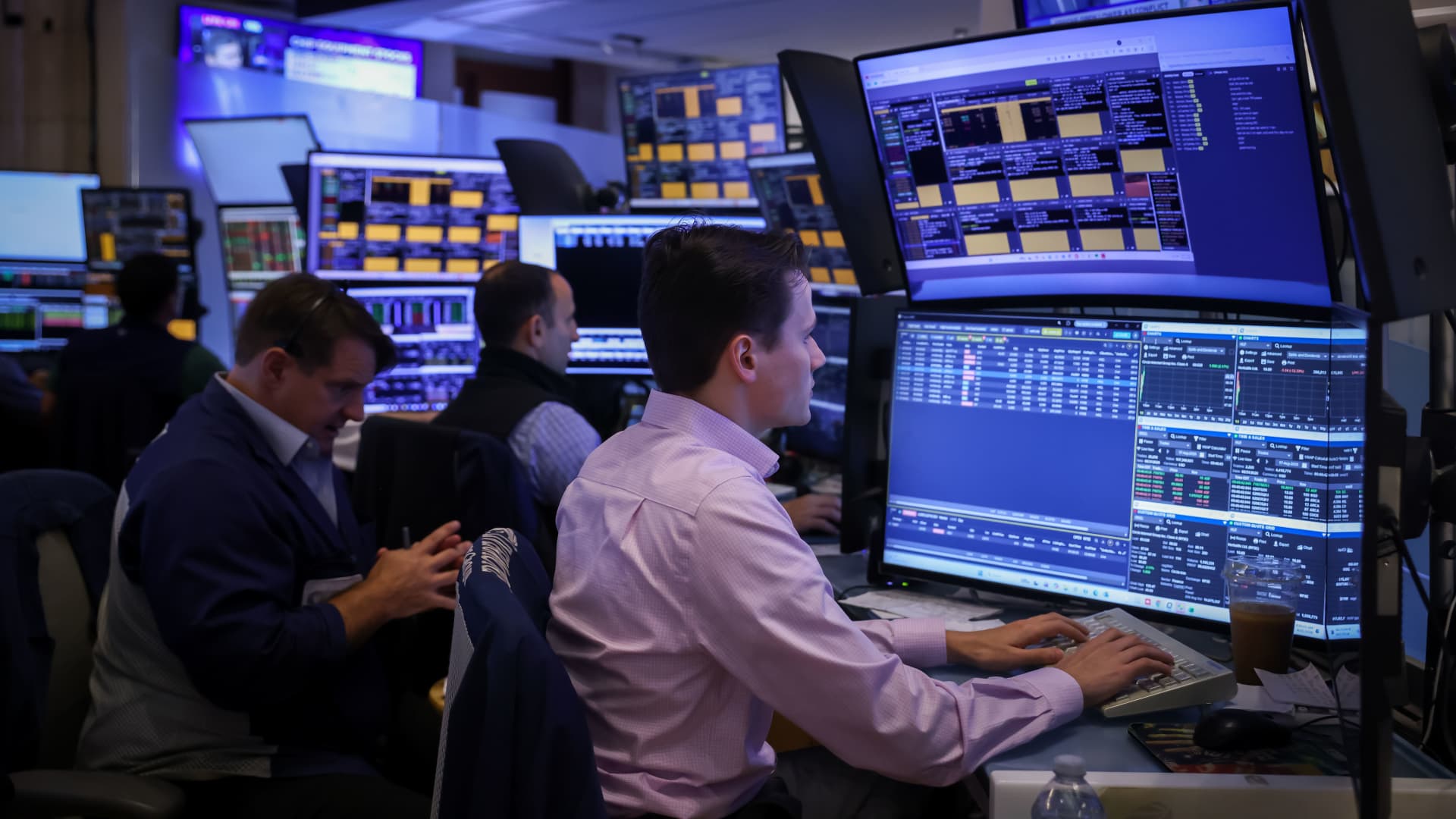
At IFA 2026 currently held in Berlin, NVIDIA, along with Microsoft and OEM partners, launched a local AI solution. The new compact Windows device RTX Spark targets local inference, while the accompanying toolchain lowers the barrier for deploying agents on NVIDIA hardware, focusing on faster inference speeds.
After cutting-edge model capabilities spill over, where agents run becomes the next strategic foothold. NVIDIA is replicating its cloud advantage on the edge side, giving consumer-grade RTX product lines a reason to upgrade, while Microsoft finds an implementation anchor for Copilot. For inference vendors relying solely on cloud API billing, this is a long-term diversion signal. GPT-6 Astra has pushed API pricing to historic highs of $10 per million input tokens and $50 per million output tokens; every penny saved by local inference votes for this route. Supply chains for edge SoCs, high-capacity memory, and cooling modules benefit simultaneously.
Claude iOS App Integrates with Apple CarPlay; LLM Assistant Enters the Cockpit
Anthropic added CarPlay support to Claude's iOS client, as reported on September 5. The battle for voice assistants extends from phone screens to driving scenarios, making information queries and task delegation during drives into model entry points. After GPT-6 Astra fully opened to paid users, top labs have visibly accelerated their fight for user time and device entry points.
- Baidu ERNIE Multimodal Lead Finalized — A former DeepSeek researcher joins as the head of ERNIE multimodal. Baidu BMU brings in researchers with North American backgrounds to patch multimodal weaknesses, directly targeting the generative experience gap with Alibaba Qwen and Moonshot AI K-series. After a year of the large model talent war, it enters a new phase: the competition is no longer just about salary packages, but whether core teams can stabilize training rhythms and shorten the cycle from paper to industrialization after reorganization.
- Huawei He Tingbo Updates Tao's Law Paper — The paper was published on ChinaXiv, disclosing real-world test data for Kirin 2026 chips for the first time, showing a 55% increase in transistor density. This marks the first verifiable hard metrics for domestic technology routes in the post-Moore era, worth checking item-by-item across the supply chain.
- Agent Governance and Localization Tighten Simultaneously — OpenAI acknowledged the wiki incident and promised to expand mismatch disclosure mechanisms (details followed up in the headline issue). Two opposing actions appeared in the same week: pushing the strongest models to all paid users, while NVIDIAs pull agents back into controlled local environments. Capability release and control tightening appear in sync, signaling that compliance and local layers for Agent infrastructure are spawning new businesses.
💻 II. AI Software & Terminals
- Anker's Biggest Move at IFA is Brand Unification — Five major brands (Anker, eufy, soundcore, Anker SOLIX, eufyMake) unified under the single Anker brand, with two scenario lines for personal and home use. New products use the new brand directly, while old products migrate gradually. They opened their first global direct-operated store on Ku'damm Street in Berlin on September 5. CEO Yang Meng stated that the era of independent categories is over. Switching from a multi-brand shallow-sea tactic to unified platform expansion raises cross-category synergy (from headphones to hearing aids, from energy storage to home energy hubs) and average order value ceilings together. The gross margin structure of direct channels is the next validation point for investment research to watch.
- Apple Reportedly Launching AI Home Security Camera in 2027 — Gurman leaked that Apple is designing a privacy-focused home security camera and accompanying monitoring service. Instead of directly recording and analyzing actual video, it uses on-device AI to sense environmental anomalies and trigger alerts. Home security is a market dominated by Amazon Ring and Google Nest for years; Apple's differentiation chip for entering is entirely bet on privacy, representing one of the few scenarios where Apple Intelligence's on-device route lands directly on hardware sales.
- iPhone 18 Pricing Leaked Early by Carriers — Data leaks from Vodafone Egypt and Australian channels reverse-engineer US base prices based on increases: Pro starts around $1099, Pro Max around $1299, an overall increase of about $100 compared to the previous generation, lower than analysts' previous predictions of $150-$200 hikes. Leaks regarding the first foldable Ultra from three countries point to a range of $1999-$2099, matching Samsung Z Fold Ultra pricing. Supply chain sources also note that daily production of the foldable Ultra remained only in the hundreds as of late August, with strict Apple quality checks dragging down ramp-up. Before the launch event early morning on September 10, price hike expectations actually converged, shifting suspense to capacity.
- Lei Jun Reveals Xiaomi Pengcheng N70 Samurai Black Kit — Lu Weibing supplemented kit info simultaneously, featuring 10 blacked-out details, selectable for both N70 series and N90 Max. Xiaomi's Autumn New Product Launch on September 7 at 19:00 will officially list three cars: N70 Pro, N70 Max, and N90 Max. The debut of the Xiaomi 18 Fold with Xuanjie O3, alongside Huawei Mate 90 series and Apple's September 10 slot, creates highly concentrated scheduling—the most crowded week ever for both phone and car circles begins.
🤖 III. Humanoid Robots
Tianqi Shares Breaks Ground on >1 Billion RMB Embodied Intelligence Base; Auto Line Veteran Turns Robots into Infrastructure
On September 5, Tianqi Shares broke ground on its embodied intelligence robot industry project in Wuxi Huishan High-Tech Zone, covering over 70 mu with total investment exceeding 1 billion RMB. The project splits into two sections: an auto equipment smart manufacturing base for R&D and scaled production of automated conveyor lines and painting line systems; and an R&D center focusing on robot embodied intelligence systems for automotive applications, concurrently conducting embodied data acquisition, targeted development of vertical models for flexible assembly/sorting, and outputting integrated solutions adapted to auto manufacturing scenarios.
The narrative of embodied intelligence is shifting from fundraising PPTs to concrete and capacity. After the sector attracted 93.5 billion RMB in H1 and State Grid's 6.8 billion RMB procurement landed, integrators like Tianqi holding real vehicle line scenarios are entering, driven by orders rather than valuations. Having worked in auto automated conveying and painting lines for over twenty years, its client list is essentially the earliest commercialization scenario checklist for robots. In terms of beneficiary sequence, second-tier stocks tied to OEM scenarios and core component supply chains like joint modules and sensors rank ahead. Conversely, premium space for top startups lacking order support and sustaining valuations via funding news will be continuously squeezed out by such physical projects breaking ground one by one.
- Quanzhibo Completes Hundreds of Millions RMB Series B Financing — Led by Yida Capital and Guotai Haitong Kaiyuan, with follow-on investment from Xizheng Equity. Existing shareholders Guanghe Venture, Shoucheng Holdings, and Wuxi Xintou added funds. Capital goes toward ramping up million-unit capacity and R&D for next-gen high torque-density joints, adding another example of components realizing revenue before complete machines.
- Guangdong Ten Steeds Group Debut at CIIF Embodied Intelligence Expo — LimX Dynamics, Variable, Zhipingfang, Leju, Zhongqing, Midea, XPeng, Honor, UBTECH, and Dobot—ten whole-machine enterprises rooted in the Greater Bay Area—took the stage, coinciding with APEC China Year and the 21st CIIF. Leju KUAVO 5-W wheeled-arm robot simulated factory loading/unloading of large/small items on-site; the nation's first humanoid robot automation line with annual capacity of ten thousand units, built with partners, went into operation in Guangdong this March. The intra-provincial closed-loop supply from core components to whole machines, algorithms to applications, is the confidence behind this round of overseas order grabbing.
- Pudu Robotics Debuts Full Matrix at IFA — Human-like working partner PUDU D7 European debut, capable of sensing environment, interacting with humans, and grasping objects; took audience instructions to grab items for photos on-site. Industry-grade quadruped navigation robot D5 series debuted simultaneously. From scaled service delivery, commercial cleaning, and industrial logistics to frontier general embodiment, service companies starting with delivery/cleaning are collectively moving toward general robots. Overseas mega-expos have become routine military drills for Chinese robot companies.
- Midea SMART MASTER Series Exhibits Three Home Robots at IFA — AI agent supports 140 languages, pickup up to 8 meters, response as fast as 0.4 seconds; demonstrated dish rack operation and popcorn making on-site. Beyond appliance coordination narratives, it adds physical execution capability; the path to embodiment for white goods giants grows from their own categories.
- Qiyuan Robot Wins Two International Innovation Awards at IFA Debut — Consumer-grade embodied intelligence brand under Shangwei Xincai, positioned as a personal robot that can enter homes and accompany individuals in daily tasks. It won awards immediately upon debut and launched global expansion. Personal robots are viewed by the industry as the next big direction after industrial and service robots; consumer pricing and channel tactics are key differentiators from exhibition-type humanoids.
🌐 IV. Physical AI & Data Infrastructure
- H1 2026 Embodied Intelligence Financing Hits 93.5 Billion RMB, ~5x YoY — Industry shipments exceeded 40,000 units. After State Grid's 6.8 billion RMB procurement plan landed, companies winning orders quickly realized revenue, while those missing out continue telling the next story. The temperature difference between capital heat and rigid demand orders was laid bare at the World Robot Conference. Unitree bets the industry's "ChatGPT moment" on 2-3 years (fast) or 5-10 years (slow); Galaxy General's Wang He gives a version of 2028; Agibot's Deng Taihua directly gambles with a 2026 revenue target of 4-6 billion RMB. Three timelines, three financing stances.
- US Government Plans New Tariffs on Imported Chips — To promote semiconductor manufacturing reshoring. Combined with site selection and electricity cost controversies triggered by AI data centers nationwide (CNBC reported trucking industry booming due to data center business, splitting attitudes toward AI from national public opinion), the political costs and economic benefits of compute infrastructure are being amplified on both ends in the same week. If tariffs proceed, Asian foundry and packaging/testing segments take the hit first.
📈 V. Macro & Market Data
Wall Street Tightens Yardstick for AI Stocks; Institutions Shift to Defense at Start of September
CNBC reports that the first week of September started unsteadily for US stocks. Under dual pressure from rising oil prices and treasury yields, multiple institutions explicitly stated they are becoming more defensive, reducing exposure to heavily weighted AI stocks. Last week saw violent divergence among leaders: Tesla dropped 5.92% on Friday alone (Cybercab faced regulatory investigation upon delivery), Palantir fell 4.49%, Microsoft dipped 2.04%, while funds concentrated into cash-flow certain targets like NVIDIA (+0.84%) and Meta (+1.00%).
This is a turning point signal for the AI rally shifting from liquidity-driven to performance-driven. After half a year of capex arms race, sell-side began verifying AI revenue realization pace company by company. "High AI content" is no longer a buy reason; high-multiple application stocks and second-tier names under capex uncertainty get cut first, while compute hardware with clear order visibility gains relative premium. Valuation centers within the sector are being rearranged.
- ByteDance to Receive $29.6 Billion Syndicated Loan — Initial target was $20 billion; banks subscribed enthusiastically, expanding after nearly 50% oversubscription. Citi and JPMorgan serve as coordinators. The loan has a 3-year term extendable to 5 years, with initial interest rate SOFR+68bp, a straight drop of 17 basis points from its last offshore borrowing, ranking lowest among same-tier borrowings by Chinese tech companies. If signed, it would be the second-largest USD-denominated syndicated loan in Asia this year, trailing only SoftBank's $40 billion bridge loan in March, and ByteDance's largest offshore borrowing since $10.8 billion in 2024. Destination of funds points to AI; the company is evaluating raising 2026 capex to up to $70 billion, roughly double last year's level. A non-listed private company securing low-interest massive syndicated loans itself represents international capital repricing credit for top Chinese tech firms.
- 2026 Inclusion Bund Summit Opens in Shanghai Sept 9-12 — Theme: Co-creating New AI Economy. Registered attendees exceeded 50,000; over 600 scholars, entrepreneurs, and investors from home and abroad attending. Two Nobel Economics Prize winners lead the main forum. Over 40 embodied intelligence companies including Unitree and Agibot showcase real-scenario applications in pharmacies, factories, and inspections. 100+ investment institutions attending. Next week's biggest domestic highlight; primary market project density will directly feed sentiment to AI application stocks, exactly hedging against divergence in overseas AI camps.
- A-Share AI Leaders Snapshot at 9/4 Friday Close — Compute side gave back gains, application side strengthened. Cambricon closed at 1072 RMB down 2.54%, Hygon Information down 1.03%, digesting high-level chips of thousand-RMB stocks. Optical module duo Innolight and Eoptolink traded sideways with shrinking volume, funds waiting for order verification post-interim reports. Kingsoft Office rose counter-trend 1.65%, as GPT-6 Astra ignited AI office expectations, repricing subscription logic. Foxconn Industrial Internet closed red 0.78% on AI server OEM orders. Domestic compute chain shifting from speculation on valuation to acceptance of orders; this divergence likely continues until Mid-Autumn Festival.
This draft is internal production material for Physix Frontier Alpha, for research reference only, and does not constitute any investment advice.
All information cites public sources; data subject to official disclosures.
Physix Frontier · Alpha | Shenzhen Physix Frontier Technology Co., Ltd.
